Introduction: The High Stakes of 2026 Academic Integrity
Is that Human score on your screen a guarantee of safety, or just a temporary relief? This is the question haunting millions of students as they prepare to hit the Submit button. Blackboard, a platform used by over 300 million students annually, has become the frontline of the battle over academic integrity. In 2026, the stakes are higher than ever. With the integration of increasingly aggressive AI detection modules, even students who use AI as a simple brainstorming tool find themselves under the microscope of academic misconduct boards.
The anxiety is well-founded, but there is a major piece of the puzzle that universities often downplay: Blackboard’s detection methods have significant limitations. According to comprehensive 2025 research into Learning Management Systems, these tools are far from the infallible truth machines they are marketed to be. This guide will provide a deep dive into how Blackboard AI detection works, explore why these systems frequently fail, and offer practical, ethical strategies for students to protect their original work from being unfairly flagged.
Check Your AI Score Before Your Professor Does
Don’t rely on guesswork. Test your essay against our specialized Blackboard simulation tool.
Simulate Blackboard CheckHow Blackboard Detects AI-Generated Content
To navigate the system, you must first understand the machinery. Blackboard doesn’t use a single detector; rather, it employs a multi-layered ecosystem of surveillance tools.
SafeAssign and Its Evolution
SafeAssign was originally designed as a traditional plagiarism checker. Its primary function is database matching—comparing your submission against a massive repository of institutional papers and internet sources. However, as of 2026, SafeAssign still fundamentally struggles with original AI-generated content. Because AI generates new sequences of words rather than copying existing ones, SafeAssign’s core matching engine often sees 0% similarity, even in raw ChatGPT outputs. While Blackboard has added an AI-inference layer to SafeAssign, it remains the weakest link in their detection chain.
The Turnitin Integration
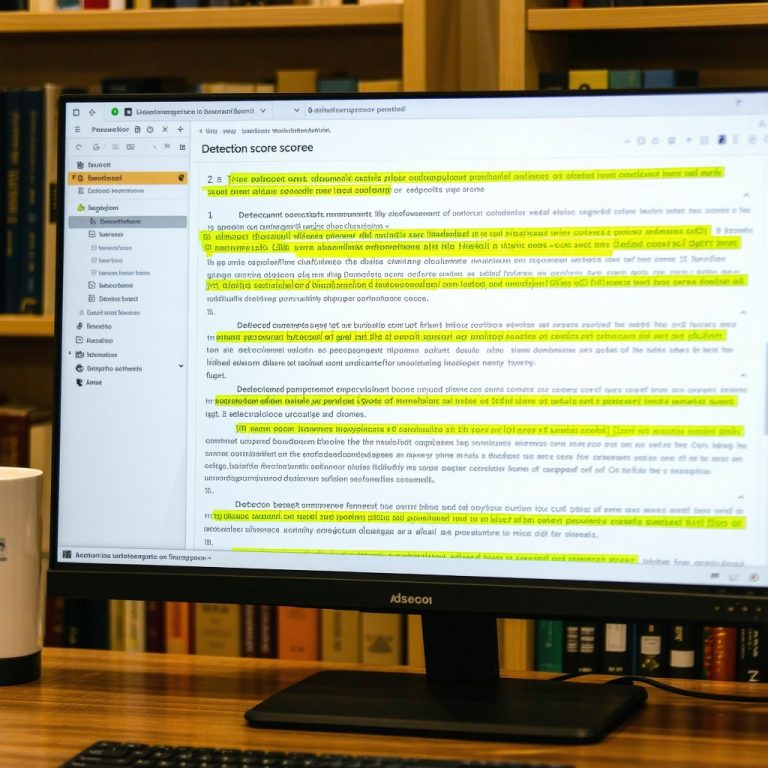
The real heavy lifter is the Turnitin AI detection integration. This system doesn’t just look for matches; it analyzes the linguistic DNA of your writing. It scans for repetitive sentence structures, uniform predictability in word choice, and the specific logical flow characteristic of Large Language Models. However, its biggest flaw remains its volatility. The University of Maryland’s 2025 research highlighted a staggering issue: Turnitin’s AI module exhibited a high false-positive rate, particularly in complex academic essays where formal language mimics AI patterns.
The Blackboard Detect Feature (v3.5)
New for 2025 and refined in early 2026, the Blackboard Detect feature examines stylistic markers. It focuses on coherence and the absence of burstiness (variation in sentence length). Despite these upgrades, it still struggles with edited or humanized AI output, often failing to distinguish between a highly organized human writer and a sophisticated AI model. Recent audits suggest that in real-world scenarios, these tools still carry a 30-40% false-positive rate, making them a guessing game rather than a forensic certainty.
Why Blackboard AI Detection Often Fails
The core reason Blackboard SafeAssign AI detection limitations are so prominent is that detection technology is inherently reactive.
- The Human-AI Blur: Detection tools operate on the assumption that human writing and AI writing are two distinct categories. However, as LLM models like GPT-5 and Claude 4 have evolved in 2026, they have become masters of mimicking human nuance.
- The Bias Against English Language Learners (ESL): One of the most concerning failures of Blackboard AI detection is its disproportionate effect on English learners. Because ESL students often use more formal, structured, and standard phrasing to avoid errors, their authentic human writing is frequently flagged as AI.
- Database vs. Originality: Since AI creates original text, there is no source to find. This forces the detector to rely on probability scores, which Anthology’s own 2025 whitepaper admitted were too unreliable to be used as sole evidence for disciplinary action.
- Legal and Ethical Roadblocks: Finally, there are significant FERPA concerns. Uploading student work to third-party AI detectors without explicit, informed consent can violate privacy laws.
6 Practical Strategies to Avoid AI Detection
In the current academic climate, the goal isn’t just to hide AI use, but to protect your work from being misclassified by overzealous algorithms. To stay safe, you need a structural and intellectual approach to humanize AI text for Blackboard.
1. Deep Structural Humanization
Surface-level changes are no longer enough. To truly avoid AI detection in Blackboard, you must rewrite significant portions of the draft in your own unique voice. Start by deleting the first and last sentences of every paragraph—AI often hides its strongest signatures there. Replace them with your own observations.
2. The 60/40 Hybrid Rule
A major red flag for the original writing Blackboard filters is consistency. To bypass this, aim for a 60/40 split: write at least 60% of the content manually. Use AI for the skeleton, but write the analysis and conclusions yourself. This creates a linguistic noise that makes automated detection nearly impossible.
3. Drastic Stylistic Variance
Algorithms like Turnitin v3.5 focus heavily on burstiness. AI tends to generate sentences of similar length. Mix short, punchy statements with longer, more academic explanations. Break up overly balanced paragraphs. This lack of mathematical symmetry is a hallmark of human thought.
4. Injecting Original Live Research
AI models are trained on past data. To make your work unmistakably human, include specific insights from your current coursework, local interviews, or personal observations from 2025-2026. This provides a temporal anchor that AI simply cannot replicate.
5. Strategic Use of Paraphrasing Tools
The February 2026 update for Blackboard integrations explicitly targeted AI bypasser tools. Use these tools only for micro-edits of specific, awkward sentences. Never run an entire paragraph through a spinner. Instead, use the tool to find a better word, then manually rebuild the sentence around it.
6. The Read Aloud Manual Polish
The final and most important step to edit AI generated content is a manual read-through. Read your essay aloud. If a sentence feels like something you would never actually say in a classroom discussion, change it. Embracing human idiosyncrasies is your best defense.
Modification Methods vs. Detection Risk (2026)
| Strategy | Effectiveness | Detection Risk | Key Benefit |
|---|---|---|---|
| Manual Sentence Editing | Excellent | Very Low | Breaks AI structural patterns completely. |
| Personal Anecdotes | Excellent | Lowest | Adds data AI has no access to. |
| Paraphrasing Tools | Moderate | Very High | Creates “Frankenstein syntax” easily caught. |
| Grammar Fixers | High | Low | Legitimate tool used for polishing. |
What NOT to Do: Common Mistakes
- Submitting Raw ChatGPT-5 Output: Raw output is detected with nearly 99% accuracy in 2026. Without manual intervention, it is an instant red flag.
- Blind Trust in Humanizers: Many paid services claim to make text undetectable, but Turnitin’s 2026 model has cataloged the signatures of these tools.
- Ignoring the Prompt Nuance: AI often gives generic answers. A high AI score combined with a slightly off-topic essay is the fastest way to trigger a manual review.
- Zero Draft History: If you are accused of using AI, the best defense is your Version History. Always write in a way that preserves your drafts.
The Ethical Perspective
In 2026, the conversation around AI detection ethical implications has reached a boiling point. Many students feel that avoiding detection is synonymous with cheating, but the reality is more nuanced. As we have seen from the high failure rates of automated tools, protecting your essay from detection is often a matter of defense, not deception.
The most ethical approach is to use AI as a collaborator—a high-powered research assistant—while ensuring the final voice, critical analysis, and intellectual labor are yours. By following the strategies in this guide, you aren’t just bypassing a filter; you are reclaiming your right to a fair evaluation.
FAQ: Blackboard AI Detection
Can Blackboard definitely detect if I used ChatGPT?
No. Blackboard cannot definitely prove AI use. It provides a probability score based on SafeAssign and Turnitin’s models. If you have heavily edited and personalized your content, a definitive detection is nearly impossible.
Will using Grammarly get me flagged for AI?
Using Grammarly for basic spell-check is safe. However, using its AI Rewrite or GrammarlyGO features to reconstruct entire paragraphs will likely trigger AI detection markers in Blackboard.
Is avoiding AI detection the same as cheating?
Most universities now distinguish between AI-Assistance and AI-Plagiarism. Using these strategies to ensure your work is original and human-sounding is part of modern academic integrity.
Conclusion: Don’t Let an Algorithm Grade Your Integrity
The landscape of education in 2026 is complex. As we have explored, Blackboard’s AI detection is powerful but fundamentally flawed, prone to bias, and frequently inaccurate. The only foolproof way to avoid issues is to be the primary author of your own work. Inject your own research, vary your style, and manually edit every draft.
Protect Your Academic Future
Stop guessing what the detector will say. Use our specialized simulation tool to find red flags before you hit submit.
Start Your Free Scan NowFast, secure, and built specifically for Blackboard LMS standards.